60° and Patchy rain nearby
Image
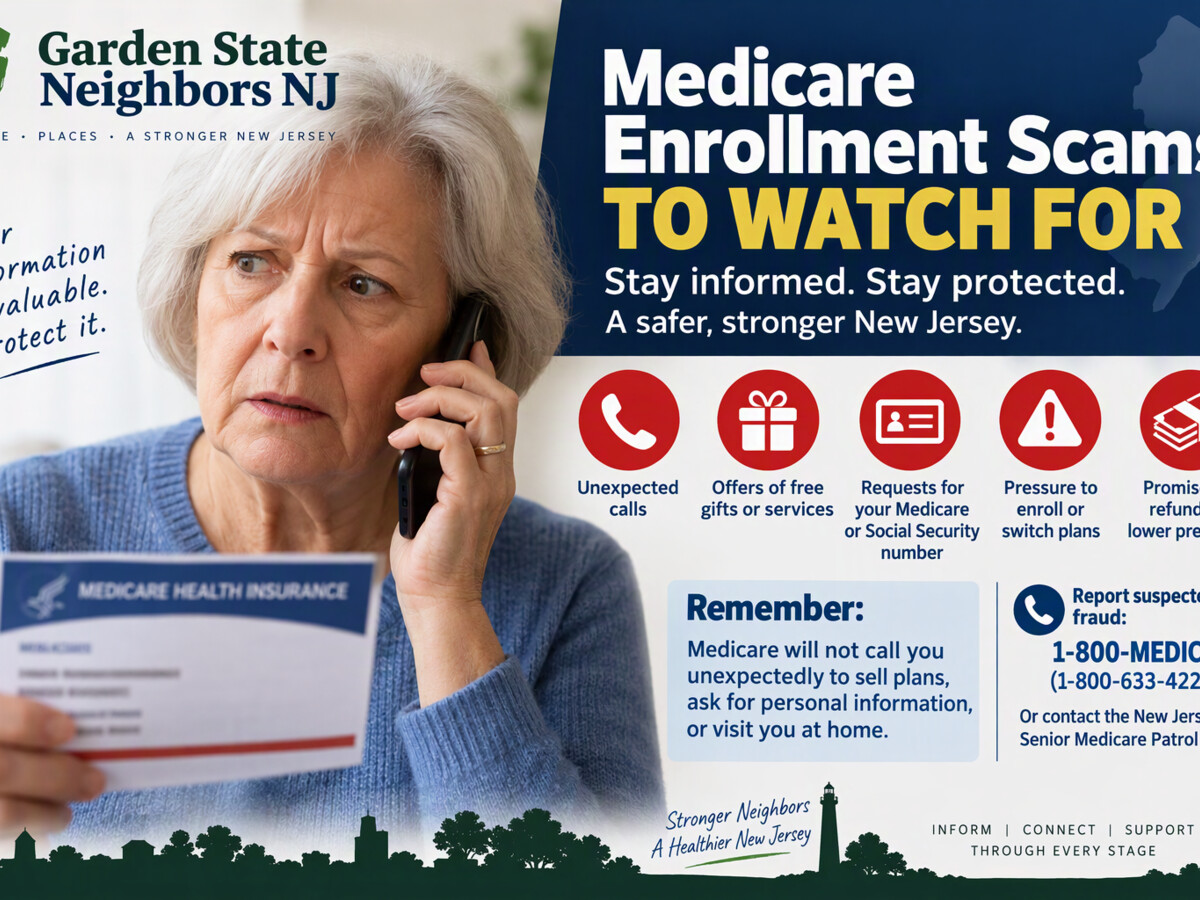


As Medicare enrollment periods approach, older adults across New Jersey are being urged to stay alert for scams designed to steal personal information, Medicare numbers, Social Security numbers, and even money. Fraudsters often take advantage of the confusion surrounding Medicare plan choices, enrollment deadlines, and benefit changes to target seniors through phone calls, text messages, emails, and door-to-door solicitations.
According to Medicare, scammers frequently pose as Medicare representatives, insurance agents, or government officials in an effort to obtain Medicare numbers, Social Security numbers, banking information, or other personal data. Medicare advises beneficiaries to protect their Medicare cards and review their claims regularly for suspicious activity. [medicare.gov], [medicare.gov]
One of the most important facts seniors should remember is that Medicare will not call beneficiaries unexpectedly to sell plans, ask for personal information, or visit homes uninvited. Medicare states that representatives only request personal information in limited circumstances, such as when returning a call initiated by the beneficiary. [medicare.gov]
Common Medicare Enrollment Scams
Scammers often use similar tactics year after year, including:
Red Flags New Jersey Residents Should Watch For
New Jersey's Senior Medicare Patrol encourages beneficiaries and caregivers to be cautious when approached by anyone requesting Medicare information or pushing enrollment decisions. The organization helps residents prevent, detect, and report health care fraud and abuse. [seniormedi...trolnj.org]
Watch for these warning signs:
Never Give Out Personal Information
Medicare beneficiaries should never provide the following information to an unsolicited caller, text message, email sender, or stranger:
Medicare specifically advises beneficiaries not to share their Medicare card or Medicare number except with trusted health care providers and authorized representatives. [medicare.gov], [medicare.gov]
Beware of "Free" Gifts and Incentives
Scammers often use attractive offers to gain trust and collect personal information. Be cautious of offers that include:
If someone is offering something for free in exchange for your Medicare number or personal information, it may be a scam. Medicare warns beneficiaries not to accept gifts or money in exchange for Medicare information or services. [medicare.gov], [medicare.gov]
Use Official Sources for Information
When reviewing Medicare coverage options or verifying information, rely on official government resources:
Medicare.gov for Medicare enrollment, benefits, and fraud reporting. [medicare.gov], [medicare.gov]
HealthCare.gov for Affordable Care Act Marketplace health insurance information.
Residents who are uncertain whether a communication is legitimate should independently visit official websites or call the published customer service numbers rather than responding directly to unsolicited contacts.
How to Protect Yourself
Experts recommend several simple steps:
Reporting Suspected Fraud
If you suspect Medicare fraud, contact 1-800-MEDICARE (1-800-633-4227) or use Medicare's fraud reporting resources. Medicare Advantage and prescription drug plan members may also have additional reporting options through their plan administrators. [medicare.gov], [medicare.gov]
New Jersey residents can also seek assistance through the Senior Medicare Patrol of New Jersey, which provides education, counseling, and support related to Medicare fraud concerns. [seniormedi...trolnj.org]
Bottom Line
Scammers rely on urgency, confusion, and fear. Before sharing any personal information, stop and verify who is contacting you. Never provide your Medicare number, Social Security number, or financial information to an unsolicited caller, and be wary of offers involving free gifts or incentives.
When in doubt, visit Medicare.gov or HealthCare.gov, or call 1-800-MEDICARE directly. A few extra minutes of caution can help protect your health coverage, finances, and identity. [medicare.gov], [medicare.gov]
For more information about Medicare fraud prevention, visit Medicare.gov or contact the Senior Medicare Patrol of New Jersey. [seniormedi...trolnj.org], [medicare.gov]