64° and Sunny
Image
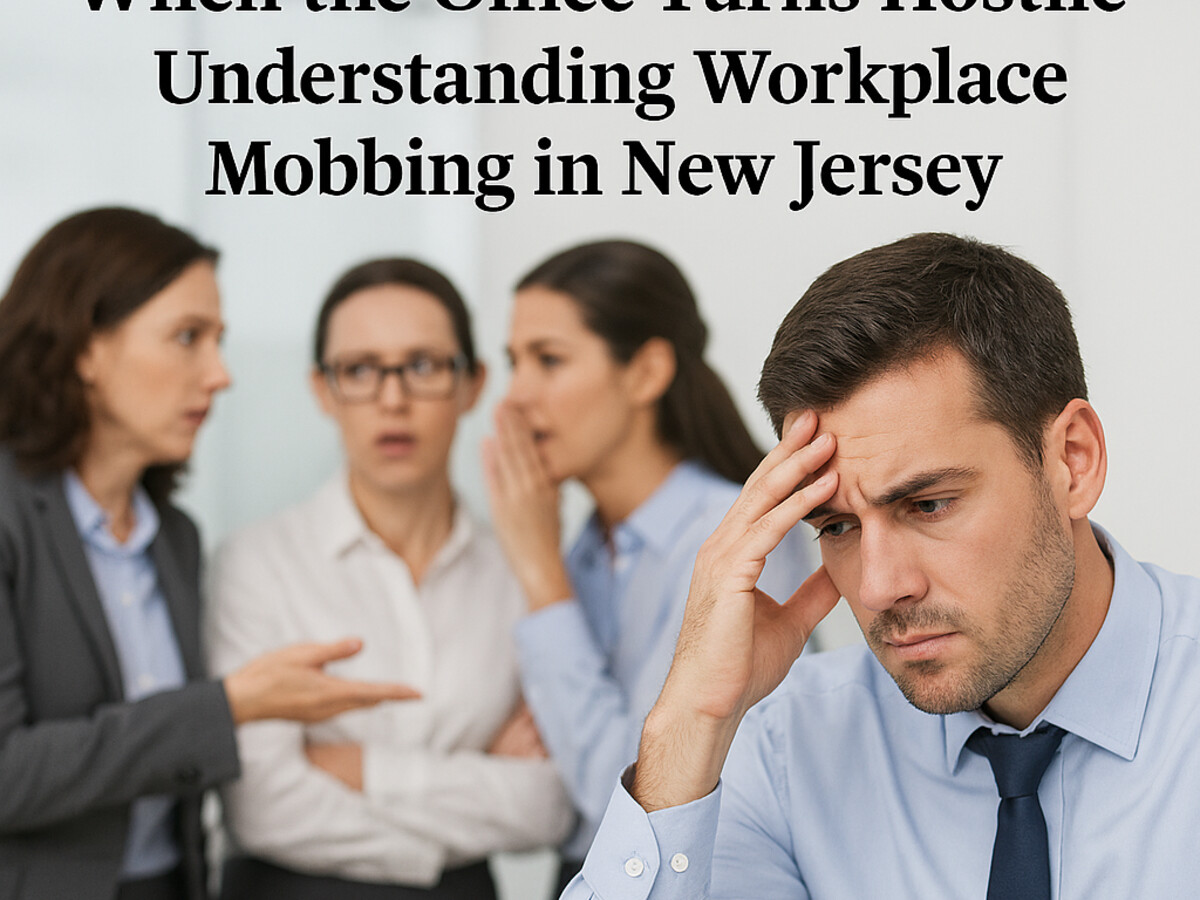



Most of us expect the usual workplace challenges — tight deadlines, tough projects, or the occasional personality clash. But for many New Jersey workers, the real danger is something far more subtle and corrosive: workplace mobbing. It’s a coordinated effort by a group of employees to isolate, undermine, or push out a colleague. And while the term may sound dramatic, the behavior is often quiet enough that victims doubt themselves long before they seek help.
Consider “David,” a fictional composite of real professionals. He joined a mid‑sized company excited to contribute and confident in his experience. However within months, he noticed a shift. A group of female colleagues began excluding him from meetings, whispering about him in hallways, and questioning his decisions in ways that felt less like collaboration and more like targeted criticism. When he raised concerns, he was told he was “reading too much into things.”
What looked like minor slights added up to a pattern — a coordinated effort to push him out.
This is workplace mobbing: collective bullying disguised as office dynamics.
New Jersey Has Strong Laws — But Mobbing Still Slips Through the Cracks
New Jersey’s Law Against Discrimination (NJLAD) is one of the strongest in the country, protecting workers from harassment, discrimination, and retaliation. But mobbing is difficult to address because:
If mobbing is tied to a protected trait — such as gender — it can qualify as a hostile work environment under NJLAD. But even when it isn’t, the emotional and professional damage is real.
Signs of Workplace Mobbing: What Employees Should Watch For
Mobbing rarely starts with something obvious. Instead, it builds slowly, often in patterns like these:
Social & Professional Exclusion
Undermining & Sabotage
Public or Private Belittling
Coordinated Group Behavior
Administrative Retaliation
When several of these signs appear together, it’s not oversensitivity — it’s a pattern.
Why Gender Still Matters — Even When the Target Is a Man
While women often face unique challenges in the workplace, men can also be targeted — especially in environments where gender dynamics, stereotypes, or group alliances influence behavior.
In David’s case, the mobbing stemmed from:
Gender bias doesn’t always move in one direction. What matters is the pattern of behavior, not the gender of the people involved.
What Employers Can Do: Prevention Starts at the Top
Workplace mobbing doesn’t happen in healthy environments. It thrives where leadership is disengaged, conflict is ignored, or culture is performative rather than real. Employers who want to prevent mobbing must take proactive, not reactive, steps.
1. Establish Clear Anti‑Harassment and Anti‑Retaliation Policies
Policies must explicitly address:
And they must be enforced consistently.
2. Train Managers to Recognize Early Warning Signs
Supervisors should be trained to spot:
3. Create Safe, Confidential Reporting Channels
Employees must feel safe reporting concerns without fear of retaliation.
4. Intervene Early and Transparently
When mobbing is suspected, employers should:
Silence is not neutrality — it’s complicity.
The Importance of Genuine Company Culture Change
Many companies talk about culture. Far fewer live it.
A workplace with “team‑building days” or inspirational posters is not automatically a healthy workplace. Culture is not what a company says — it’s what a company tolerates.
Genuine culture change requires:
Authentic Leadership
Leaders must model respect, transparency, and accountability.
Psychological Safety
Employees should feel safe speaking up, disagreeing, and asking for help.
Accountability at Every Level
High performers who behave badly must face consequences.
Continuous Feedback Loops
Regular climate surveys, listening sessions, and open communication help identify issues early.
A Commitment to Equity
Gender, race, age, and identity all shape workplace experiences. A healthy culture acknowledges this and works to close gaps.
When culture is genuine, mobbing has nowhere to hide.